


Panama - Auction Lot Lamastus Family Estate Falda Washed - PA1504

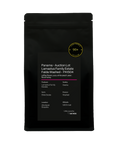
Panama - Auction Lot Lamastus Family Estate Falda Washed - PA1504

155.00 Sale Save

coffee flower, yuzu, white peach, pear, floral honey

Weight 50 Grams
Roast Profile Filter | Espresso
Roast to Order Whole Beans

Producer: Lamastus Family Estates
Farm: Elida Estate
Location
: Alto Quiel, Boquete
Variety: Geisha
Process: Washed
Altitude: 1,800 masl

Fermentation ▫▫▫
Sweetness ▪▪▪▪
Acidity ▪▪▪▪▫
Roast ▪▪▫▫

The Lamastus Family Estates have accrued the most Best of Panama awards to date. They won the Producer of the Year Award in 2022, which followed their two peat victories in 2018 for the Washed Geisha category and in 2019 for both Washed and Natural.

A coffee company founded in 1918 by Robert Lamastus, they have evolved with the times under the leadership of Robert's son Thatcher, grandson Wilford Sr., and great-grandson Wilford Jr. They have accrued the most BOP awards to date.

Their four farms are Elida, El Burro, Luito, and Lulo, each one benefitting from discrete microclimates which, together with variety, are primarily responsible for the intricacies and flavor potential of their coffees.

El Burro Estate is among the southernmost coffee farms in Panama, nearest to the Pacific Ocean. Part of the Estate falls within the protected ecological forest reserve, Baru Volcano National Park (BVNP).

As such, it benefits from abundant forest cover, nutrient-rich volcanic soils, and a specific combination of different temperatures, winds, and precipitation, comprising the unique microclimate that translates to the distinctive flavors of each cup of El Burro Geisha.

Panama Geisha is a rare, delicate, and complex variety well-loved for its sweet florality and citrus highlights. Since its debut win at the Best of Panama auction in 2004, it has kept specialty coffee lovers everywhere captivated by its endless possibilities, delicacy, complexity, and clarity of flavors.

As such, it is often showcased on coffee competition stages by a great number of coffee champions, and it also continues to fetch the highest prices.

While a coffee’s truest intrinsic qualities are still largely believed to be showcased best by traditional washed processing due to the demucilaging, washing, and scrubbing steps removing all traces of fruit from the bean, the expertise of seasoned and passionate producers like Lamastus family Estates allows them to direct the flavor character of the Panama Geisha towards a seemingly endless diversity of delightfully surprising trajectories.

They do this through the purposeful implementation of traditional methods like the natural and honey processes, as well as intentional and innovative processing styles.

- Ready your brewing tools ahead.
- Keep your coffee gear and containers clean.
- Decide and adjust your grind size based on:
— Your coffee’s roast date
— Your brewing method
- Be consistent with water quality and measuring weight, ratios, and time.
- Remember!
— Let your palate help you personalize the best recipe for you.
— Brew often and have fun!

More about Brewing here.

HOW TO BREW:

Before the first pour
• Prepare a dose of 15 grams of coffee.
• Heat water to around 93 - 96 degrees Celsius.
• Pre-wet the paper filter on the dripper & dispose of the water in the server.
• Grind the coffee to about 700 to 800 microns.
• Place the coffee grinds onto the pre-wetted paper filter on the dripper.

For the first pour and bloom.
• Pour 40 ml in a circular manner.
• Let the coffee bloom until 30-40 seconds.

For the second pour.
• Continuing in a circular manner, pour 70ml more, until 110 ml, by 1 minute and 10 seconds.

At the third pour and onto the last & fourth pour.
• Still in circles, pour the next 70 ml to make 180 ml within 2 minutes.
• For the last pour, focus at the center until 225 ml.
• Dripping should complete within 2 minutes to 3 minutes and 20 seconds.

After the last pour.
• If the water drains either slower than 3 minutes or faster than 2 minutes and 30 seconds, consider adjusting your grind size.
• Dispose of the coffee grounds & the paper filter responsibly.
• Pour the brew into your favorite cup — and enjoy your coffee!