Colombia - El Vergel Estate Watermelon Candy Blast

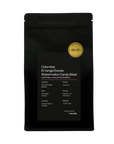
Colombia - El Vergel Estate Watermelon Candy Blast

53.00 Sale Save

watermelon, rose, lychee, blueberry

Weight 100 Grams
Roast Profile Filter | Espresso
Grind Option Whole beans

Producer: Elias & Shady Bayter
Farm: El Vergel Estate
Location : Huila, Tolima, Caldas
Variety: Caturra 
Process: Honey Co-ferment Watermelon
Altitude: 1,750 masl

Fermentation ▪▪▫▫▫
Sweetness ▪▪▪▪
Acidity ▪▪▪▪▫
Roast ▪▪▫▫▫

El Vergel didn’t begin with coffee. It began with Martha Bayer, her husband, and avocado trees in Fresno, Tolima. In 2005, when pestilence disrupted their harvest and threatened the farm’s future, Martha introduced coffee as a way to diversify crops and steady the land.

The experiment demanded constant growth and learning — and it paid off. Today, El Vergel is known as one of the oldest single-estate farms in the region. While Martha has since stepped back, her sons, Elias and Shady Bayter, carry the farm forward with the same daring spirit that shaped the estate.

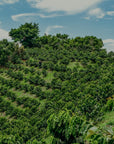
At El Vergel, processing is approached as an evolving, experimental practice, which they call “The New Way of Coffee.” The Bayter brothers’ methods pair naturally with the nutrient-rich soils of Black Mountain, the inactive volcano where the estate sits.

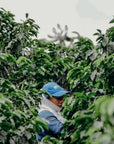
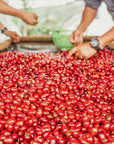
All their coffee trees, grown at 1,500 masl, yield dense, expressive cherries. Once fully mature, the cherries are hand harvested by tenured pickers who know the land intimately.

This balance of innovation and responsibility earned El Vergel the Federación Nacional de Cafeteros’s “Rainforest” certification between 2014 and 2015, which recognizes that the farm supports the environmental, social, and economic pillars of sustainability.

The Bayter brothers blend tradition and innovation, so that even all coffees — even decaffeinated ones — become cups worthy of celebration. At El Vergel, they keep with Colombian farming methods and cultivate over 28 coffee varieties in different small plots, with distinct microclimates to precisely grow each lot.

For their decaf, the brothers applied Sugar Cane Ethyl Acetate processing, or “natural decaf” to their Caturra. They sourced their ethyl acetate from Colombian fermented sugarcane molasses, grounding this experiment in their locale. The process is gentle: exposing green coffee to water then steam, so beans expand by absorbing moisture. This opens the cellular structure allowing the ethyl acetate to naturally dissolve caffeine.

This same spirit of dedicated refinement has led to El Vergel’s evolution. In 2018, the brothers modernized the farm and introduced aerobic and anaerobic processing.

Since then, they’ve developed research on yeast and bacteria to guide fermentation with care. It’s work that led to their development of Colombia’s first Koji fermentation process — a milestone that redefined what green coffee could become.

- Ready your brewing tools ahead.
- Keep your coffee gear and containers clean.
- Decide and adjust your grind size based on:
— Your coffee’s roast date
— Your brewing method
- Be consistent with water quality and measuring weight, ratios, and time.
- Remember!
— Let your palate help you personalize the best recipe for you.
— Brew often and have fun!

More about Brewing here.

HOW TO BREW:

Before the first pour

• Prepare a dose of 15 grams of coffee.
• Heat water to around 93 - 96 degrees Celsius.
• Pre-wet the paper filter on the dripper & dispose of the water in the server.
• Grind the coffee to about 700 to 800 microns.
• Place the coffee grinds onto the pre-wetted paper filter on the dripper.

For the first pour and bloom.
• Pour 40 ml in a circular manner.
• Let the coffee bloom until 30-40 seconds.

For the second pour.
• Continuing in a circular manner, pour 70ml more, until 110 ml, by 1 minute and 10 seconds.

At the third pour and onto the last & fourth pour.
• Still in circles, pour the next 70 ml to make 180 ml within 2 minutes.
• For the last pour, focus at the center until 225 ml.
• Dripping should complete within 2 minutes to 3 minutes and 20 seconds.

After the last pour.
• If the water drains either slower than 3 minutes or faster than 2 minutes and 30 seconds, consider adjusting your grind size.
• Dispose of the coffee grounds & the paper filter responsibly.
• Pour the brew into your favorite cup — and enjoy your coffee!