



Ethiopia - Elto - Elora Station River Flow Natural CF8

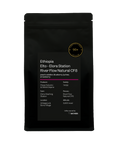
Ethiopia - Elto - Elora Station River Flow Natural CF8

65.00 Sale Save

peach cobbler, blueberry, lychee, strawberry

Weight 100 grams
Roast Profile Filter | Espresso
Grind Size Whole Beans

Producer: Eliyas Dukamo & Atiklit Dejene
Farm: Elora Washing Station

Location: Arbegona & Bona Village 
Variety: 74158
Process: River Flow Natural CF8
Altitude: 2,400 masl

Fermentation ▪▪▪▪▫
Sweetness ▪▪▪
Acidity ▪▪▪▪▫
Roast ▪▪▪▫▫

Elto Coffee is the passion project of Sidama Bensa-based couple Eliyas Dukamo and Atiklit Dejene. Its name comes from a Sidamic word meaning “more than passion” and “abundance” — an intention that quietly shapes every cup they produce.

Both trained as professional cuppers by the Ethiopian Tea and Coffee Authority, Eliyas and Atiklit approach coffee with a rare closeness to both craft and community. Their work explores flavor potential while honoring value at origin, connecting technical knowledge with meaningful collaboration with neighboring smallholder farmers.

Here, coffee is an act of care. Elto’s nano-lot approach focuses on producing coffees that have a story: grown from carefully selected cherries, harvested in small volumes, and processed through thoughtful adaptations of traditional methods. This is luxury guided by curiosity rather than excess.

Their attention has carried Elto coffees onto the global stage, appearing in championship cups — including those brewed by the winner of the Golden Bean East Asia Champion 2025. Each lot reflects a belief that when care leads the process, the cup has a way of speaking for itself.

“Ethiopian heirloom” speaks to two genetic lineages: JARC varieties and regional landraces. Developed by the Jimma Agricultural Research Center, JARC selections are bred for resilience, adaptability, and quality, while landraces grow freely in the wild and remain shaped by generations of place rather than intervention.

Both find their way into Elto’s coffees, with processing acting as the bridge between genetics and terroir.

Washed lots are pulped and carefully fermented, then dried slowly on shaded African beds, revealing brightness and structure. Naturals dry as whole cherries over time, building depth, sweetness, and fruit-forward expression. Honey processes sit between the two, keeping just enough mucilage to lend florality, roundness, and texture.

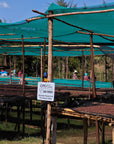
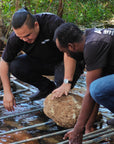
They also employ an experimental post-processing technique known as River Flow Fermentation, which seals fresh cherries in bags and submerges them in running water to undergo anaerobic fermentation. Here, adjusted timings and experimentation with microbial activity guide flavor while honoring what the coffee already carries.

brewing guide

- Ready your brewing tools ahead.
- Keep your coffee gear and containers clean.
- Decide and adjust your grind size based on:
— Your coffee’s roast date
— Your brewing method
- Be consistent with water quality and measuring weight, ratios, and time.
- Remember!
— Let your palate help you personalize the best recipe for you.
— Brew often and have fun!

More about Brewing here.

HOW TO BREW:

Before the first pour
• Prepare a dose of 15 grams of coffee.
• Heat water to around 90 - 93 degrees Celsius.
• Pre-wet the paper filter on the dripper & dispose of the water in the server.
• Grind the coffee to about 700 to 800 microns.
• Place the coffee grinds onto the pre-wetted paper filter on the dripper.

For the first pour and bloom.
• Pour 40 ml in a circular manner.
• Let the coffee bloom until 30-40 seconds.

For the second pour.
• Continuing in a circular manner, pour 70ml more, until 110 ml, by 1 minute and 10 seconds.

At the third pour and onto the last & fourth pour.
• Still in circles, pour the next 70 ml to make 180 ml within 2 minutes.
• For the last pour, focus at the center until 225 ml.
• Dripping should complete within 2 minutes to 3 minutes and 20 seconds.

After the last pour.
• If the water drains either slower than 3 minutes or faster than 2 minutes and 30 seconds, consider adjusting your grind size.
• Dispose of the coffee grounds & the paper filter responsibly.
• Pour the brew into your favorite cup — and enjoy your coffee!